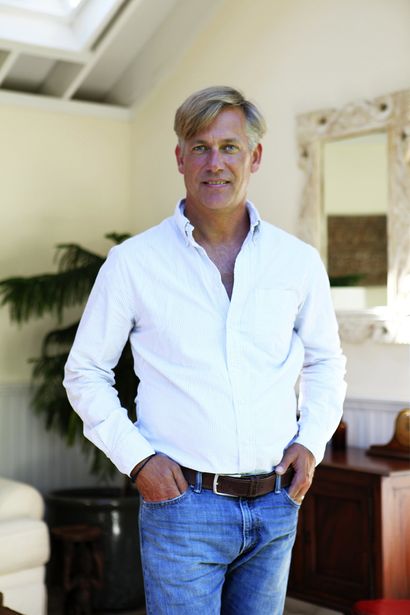
James Martin McChesney
owner and Principal Architect
A Hampton's local – Jim was raised in Quogue. Growing up here on the East End, He was taken by the abundant beauty of its natural wonders – the magnificent seascape, the special quality of light, and not least of all the landscape, which is graced by such an incredible variety of indigenous residential architecture.
From the classic grace of shingled cottage design, to the sleek, organic shapes and textures of modern design it was here that Jim's love of architecture, and the source of his inspiration was born.
He enrolled in The Catholic University of America, and received a Bachelor of Science in Architecture in 1986, followed by a Bachelor of Architecture from City College of New York in 1989.
After receiving his degrees, Jim began an apprenticeship at Beyer, Blinder and Belle in New York for three inspiring and productive years. During this time, he contributed his efforts to several major historic projects, including the restorations of Ellis Island and Grand Central Station.
As much as he enjoyed working and living in NYC, Hampton's residential design was his real passion. So, he came home to the East End, settling in Southampton and joined the East Hampton satellite office of Peter Marino Architect for three years. In 1994, Jim became a New York State registered Architect.
He opened his own firm in 1996 and has since designed and executed a number of new homes, renovations, and restorations. Fluent in a multitude of design vernaculars, Jim takes immense pleasure and pride in the challenges each project provides, whether from the ground up, a renovation, or restoration.
Jim believes the foundation of every successful project is built upon the constructive and open collaboration between client, builder, and architect. With each client and every project, Jim dedicates himself to converging spatial essentials, lifestyle needs and aesthetic values into beautiful homes designed for real living, that always retain the integrity of their natural settings.